
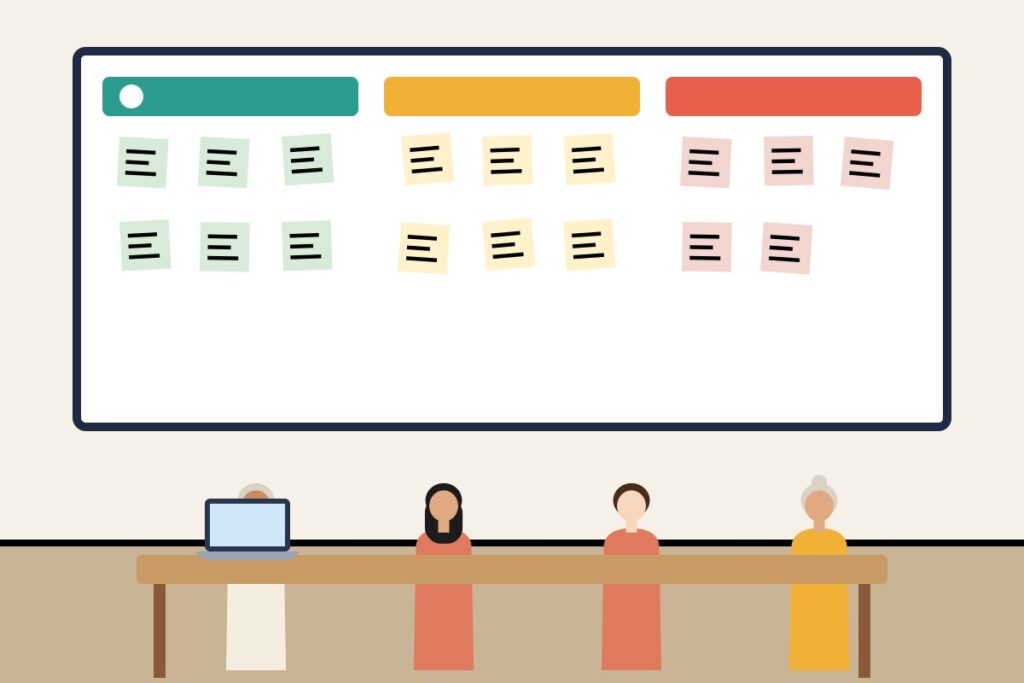
Retrospectives, a regular meeting where a team reflects on how it works and looks for ways to improve, are among the most powerful practices a team can adopt. They create a safe space to talk about what went well, what did not, and what to try next. But many teams find that their retrospectives repeat the same complaints and lead to little change. The difference is in the facilitation and the follow-through.
Create psychological safety
People speak honestly only when they feel safe to do so. Make it clear that the aim is to improve the process, not to blame individuals. Begin with an agreed set of ground rules, such as respecting different views and keeping what is shared inside the room.
A simple format
- What went well? Celebrate successes and keep doing them.
- What did not go well? Name challenges without blame.
- What can we try? Turn insights into specific experiments.
Give everyone a few minutes to write their thoughts on sticky notes or in a shared document, then group the notes into themes. Discuss the themes that matter most.
Choose a few actions, not many
The most common mistake is to leave with a long list of improvements and then do none of them. Choose one to three actions at most. Make each specific, assign an owner, and set a date for review. Small changes that actually happen are worth more than ambitious plans that do not.
Review last time’s actions first
Start every retrospective by looking at the previous actions. Did they happen? Did they help? This builds trust that the exercise leads somewhere, and it prevents the same issues from reappearing.
Vary the format
If the sessions begin to feel routine, change the approach. Try a timeline of the project, a ratings exercise, or a theme such as communication or workload. A fresh format helps people think differently.
Include the right people
Keep the group to those who did the work together. Having a manager present can sometimes limit candour, so consider whether their presence helps or hinders, and be open about it.
A retrospective is a gift of time to learn. Make the next one count by choosing one meaningful action and following it through.