2026 snapshot
Meetings by the numbers
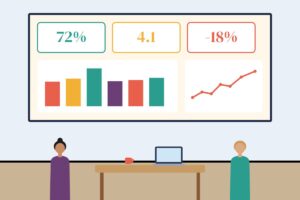
Average meetings per knowledge worker per week, including quick check-ins.
2026 industry roundupAverage weekly time in meetings, close to a third of the working week.
2026 industry roundupAverage meeting length, down from 51 minutes, while the number of meetings has nearly doubled.
2026 industry roundupShare of meetings that include at least one remote participant.
2026 industry roundupMore meetings, shorter meetings
One of the clearest trends is a shift towards frequent, shorter meetings. Quick syncs, stand-ups, and video check-ins have multiplied, while the average length has crept down. The total time has still grown, and several roundups estimate that meetings now fill roughly a quarter to a third of a knowledge worker’s week.
Hybrid is the default
Hybrid and remote work have changed what a meeting is. One 2026 roundup reports that most meetings now include at least one remote participant. That makes meeting design more important: people in the room and people on screen need an equal chance to be seen and heard.
Remote, hybrid, and in-office loads
Meeting load varies by working pattern. Figures attributed to Owl Labs and compiled in a 2026 roundup suggest fully remote workers average about 25.6 meetings per week, hybrid workers around 20, and in-office workers about 14.2. Unproductive meeting time has also risen: Atlassian’s 2024 research, as reported second-hand, put it at 3.7 hours per week for individual contributors, up from 1.7 in 2019.
Fatigue and focus
Another roundup reports that around half of remote workers experience virtual meeting fatigue. This echoes academic research on video calls, which points to non-verbal overload and too few breaks.
2019 and 2026 compared
| Measure | 2019 (Doodle) | 2026 (industry roundups) |
|---|---|---|
| Meetings per week | About 3 per professional surveyed | About 21.7 per knowledge worker |
| Typical length | About 1 hour | About 47 minutes |
| Time seen as wasted | About 2 hours per week | About 3.7 to 5 hours per week, depending on the source |
| Main format | In person and phone, with growing video | Mostly hybrid, with remote participants |
What leading teams are doing
- Setting meeting-free blocks so people can do focused work.
- Defaulting to shorter meetings with a written agenda.
- Using written updates and recordings instead of status meetings.
- Inviting fewer people and sharing notes with everyone else.
- Leaving buffers between calls and respecting working hours across time zones.
- Reviewing recurring meetings regularly and cancelling those that no longer help.
Looking ahead
Expect continued experimentation. Teams are trying new tools for scheduling, notes, and summaries, and many are rethinking when a meeting is truly needed. What is unlikely to change is the human need to gather. We will keep updating this page as new research becomes available.
Related reading: the financial impact of meetings and why meetings matter.
Keep exploring
More about meetings
Join the conversation
Have a meeting story to share?
Tell us about the best (or worst) meeting you have been to. We would love to hear from you.