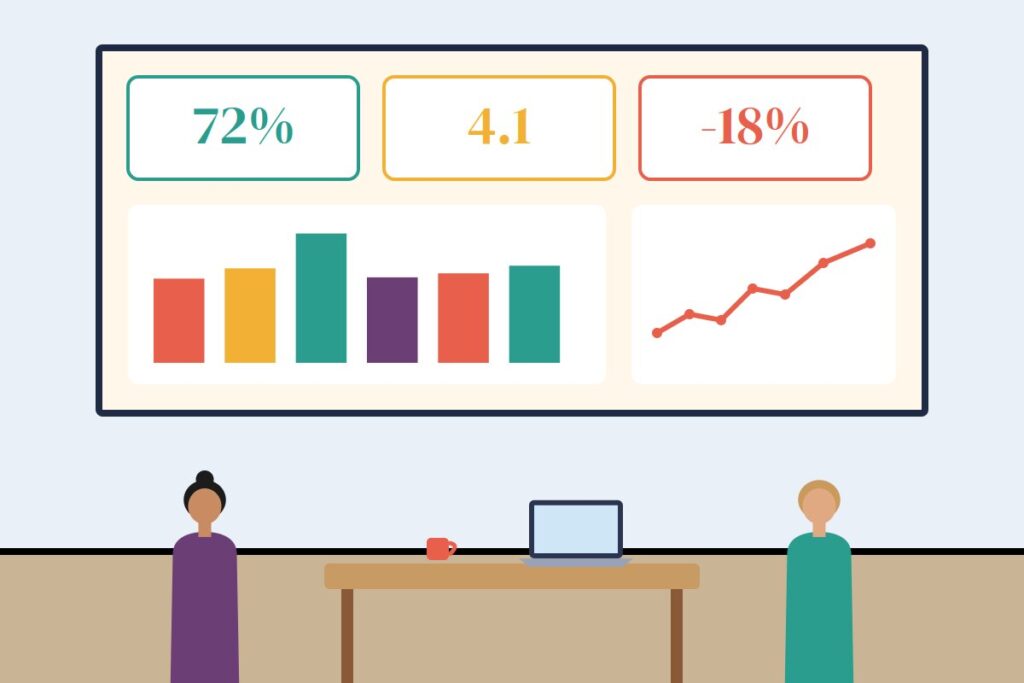
Most organisations have a strong opinion about their meetings, often negative, and very little data. Because meetings are so common, we tend to treat them as a fact of life instead of something we can examine and improve. A few simple measurements can reveal where time is going and which meetings are worth keeping.
Start with a calendar audit
Look at a typical week of your team’s calendars. How many hours go to meetings? Which are recurring? How many people attend each? A simple spreadsheet or the reports built into your calendar tools can show patterns, such as meetings that always overrun or recurring meetings with a dwindling attendance.
Measure what matters
- Time: total hours spent in meetings per person per week.
- Cost: an approximate figure based on attendees and their time.
- Usefulness: a quick rating from attendees after the meeting.
- Outcomes: how many decisions were made and how many actions completed.
- Attendance: whether people who are invited actually need to be there.
Ask for feedback
A two-question survey after a meeting can reveal a lot: “Was this meeting a good use of your time?” and “What one thing would improve it?” Keep it short and anonymous if possible. Over time, the responses show which meetings are working and which are not.
Look at the outputs
A meeting that does not lead to decisions, actions, or shared understanding is not doing its job. Check whether actions from previous meetings were completed, and whether discussions are repeated from week to week. Repetition is a clear sign that something needs to change.
Set a few targets
Choose one or two goals, such as reducing average meeting length by ten percent or cancelling a recurring meeting each quarter. Make them realistic and share progress with the team. Targets keep the focus on improvement rather than complaint.
Review regularly
Schedule a quarterly meeting audit. For each recurring meeting, ask whether it still has a clear purpose, the right attendees, and a good format. Be ready to shorten, merge, or retire meetings.
Use the data kindly
Measurement should help the team, not police it. Share findings openly, celebrate improvements, and involve people in deciding what to change.
Start small: pick one week and count the hours. You may be surprised by what you find, and by how much you can gain.