Open a calendar and you will notice that meetings almost always last thirty or sixty minutes. These numbers are not special. They are simply the defaults built into scheduling tools. And because work expands to fill the time available, a meeting booked for an hour often takes an hour, even when the real content needed twenty minutes.
Why shorter works
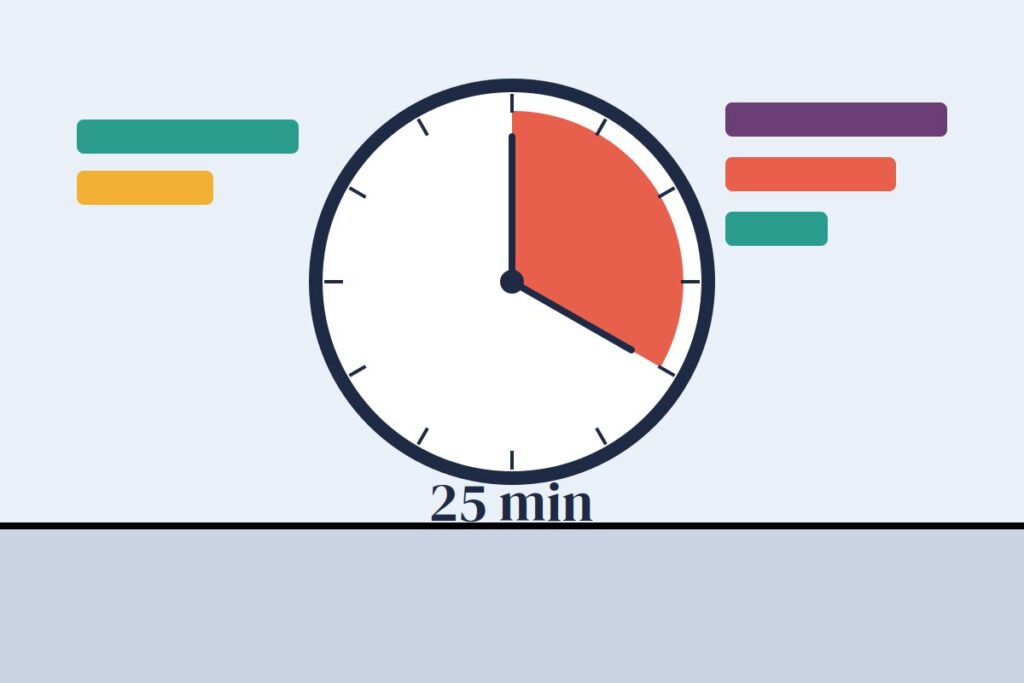
A shorter meeting forces focus. When everyone knows there are only twenty-five minutes, small talk shrinks, the agenda tightens, and decisions get made. It also leaves a buffer at the end, which gives people time to breathe, take a note, or get to their next meeting without rushing in late and stressed.
The five-minute buffer
Consider what happens in a day of back-to-back calls. People arrive late, overrun, and carry the unfinished business of one meeting into the next. By ending meetings five or ten minutes early, you create natural gaps. Those minutes become time for a drink of water, a quick stretch, or a note about what was just discussed.
How to make the change
- Change your calendar default to 25 or 50 minutes.
- Tell your team why you are doing it so it does not feel like a rule imposed from above.
- Start on time and avoid recapping for latecomers.
- Share the agenda in advance so you can begin straight away.
- If a meeting really needs the full time, keep it, but make that the exception.
What about complex discussions?
Some conversations need more time: strategic planning, difficult feedback, creative workshops. For these, schedule the time they need. The point is not that all meetings should be short, but that length should be chosen deliberately instead of by default.
Watch for the side effects
Shorter meetings require better preparation. If people are not ready, twenty-five minutes can feel rushed. Encourage the habit of sharing pre-reads, and be willing to schedule a follow-up for anything that cannot be resolved in time.
A small change with a big effect
Across a team of ten people, saving just five minutes per meeting adds up quickly over a year. More importantly, it signals that you value people’s time. That sets a cultural tone that goes far beyond the calendar.
Try it for a month: set your default to twenty-five minutes and notice what changes. You may never go back to the hour.